About
The visual side is the part I’m surest of. That’s why it waits.
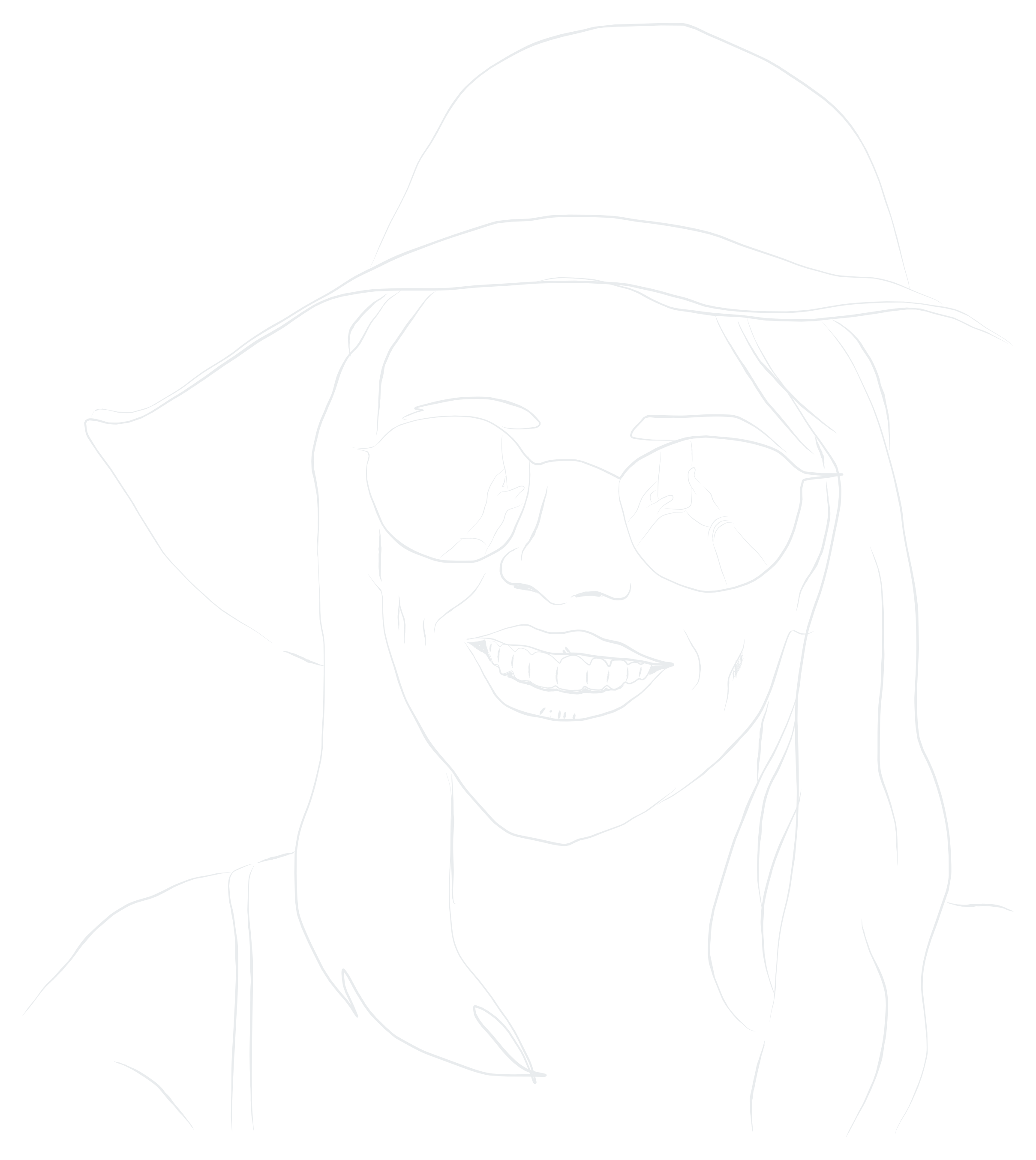
Yep, that’s me. I started out in print, and you can see the craft. On FNZ it stayed in lo-fi through 15+ review sessions, because what we were building was never agreed.
Let me rewind.
01
How I got here
TLDR
Fourteen years in design, eleven of them in UX, and the job has changed shape six times. It went from arranging information on a page, to guiding a stranger through a building, to the payment flows a bank runs on, to a product from zero to one, to changing the question being asked, to designing the conditions the work happens in, and now to building the tools I work with.
What grew is the scope, not the job title. The titles reset when I changed country. The scope never did.
Want it with the dates and the titles on it? That’s what the CV is for.
-
The beginning
“Y is a crooked letter, and you can’t make it straight.”
Somebody told me that when I was small. I disagreed. Take the two points and stretch them out. I’ve been doing a version of that ever since, and it’s still the only thing on my CV that has never changed.
-
2012
Learning the invisible lines
Nikon South Africa, in-house designer. Print teaches you fast that a chaotic layout confuses the reader, and that there is no second deploy to fix it in. Reading order first, alignment second, decoration last if it earns a place at all. I still build screens that way.
-
2013–2015
Designing for someone who is lost
The jump into digital, doing agency work on retail mall accounts. Same client, two surfaces: a website you choose to visit, and a wayfinding kiosk you meet by accident on your way past. The kiosk is the harder brief, because nobody standing in a mall agreed to learn your system. First time I had to grow back into something new, and not the last.
-
2015–2020
Shipping the flows
FNB, business and enterprise banking. Five years: eight payment flows rolled out countrywide, the app’s self-service profile and compliance zone, design pods managed and three junior designers coached. I learned that the framework under a design outlives every screen in it. Former colleagues tell me the entitlement model we drew the journeys against shaped work for years after I left.
-
2022
Owning a product, zero to one
J.P. Morgan, Strategic Indices. A backtesting capability the bank didn’t have, discovery to tested design in eight weeks, and it shipped before the year was out. I learned to hold a line under real time pressure, against people who each wanted one more thing and were each individually right.
-
2023
Changing the question
J.P. Morgan, Capital Markets. While redesigning a homepage, I found that frequent clients were entering through their tools instead. I raised the mismatch, but the MVP launch stayed fixed, and the findings were parked for a phase two that came after I left. The same year, I onboarded 83% of more than 300 enterprise users onto the 2023 markets release, contributing to the reusable UX templates the wider team adopted.
-
2025
Designing the conditions
FNZ, a wealth management client portal. Sole designer, six product owners across two organisations, and a word, “SaaS”, that meant something different every time it was said. Seven months, most of it spent trying to get everyone to agree what we were building, with the screens held at lo-fi so the argument stayed on that. The single inbox and request-led documents landed; the whole never did. That is where the 15+ sessions at the top of this page come from: showing anyone a colour would have moved the argument to what it looked like, and we hadn’t settled what it was.
-
Now
Building my own tools
Adviser tooling in regulated wealth, which I can’t show you. And increasingly the things around the work: three tools in the AI lab, a self-initiated concept built on an AI-accelerated workflow, and this site.
02
What I actually do
I work in fintech and regulated B2B. Wealth platforms, business banking, capital markets. Places where the rules are real, the workflows are older than the software, and the person at the end of it never chose to become an expert in any of it.
I walk into those domains without the knowledge, which sounds like a weakness and is the most useful thing I bring. Not knowing means I have to ask, and somewhere in the answers is an assumption everyone has been designing around without noticing.
Then the work is subtraction. Cut what’s left down to what earns its place, and defend that.
The defending is most of it. Having an opinion about simplicity is free. Holding it across 15+ review sessions, against six product owners who each want one more thing, is the job.
03
What I’m like to work with
I ask the question everyone is thinking but no one wants to say aloud. It is usually some version of why are we doing it this way? The answer is often that no one has checked in a while.
I give concise feedback and prefer to receive it the same way. I don’t enjoy friction. A polite room that agrees on nothing just costs more. The argument is with the idea, never the person behind it, and when someone else has the better answer, I drop mine and move on.
The rest is discipline: stay kind to the person on the receiving end, and keep the whole system in view, because nothing in a regulated product moves alone.
- CuriousWhat can it do?
- ClarifyingWhat are we actually solving?
- KindWho has to live with this?
04
Where the visual side goes
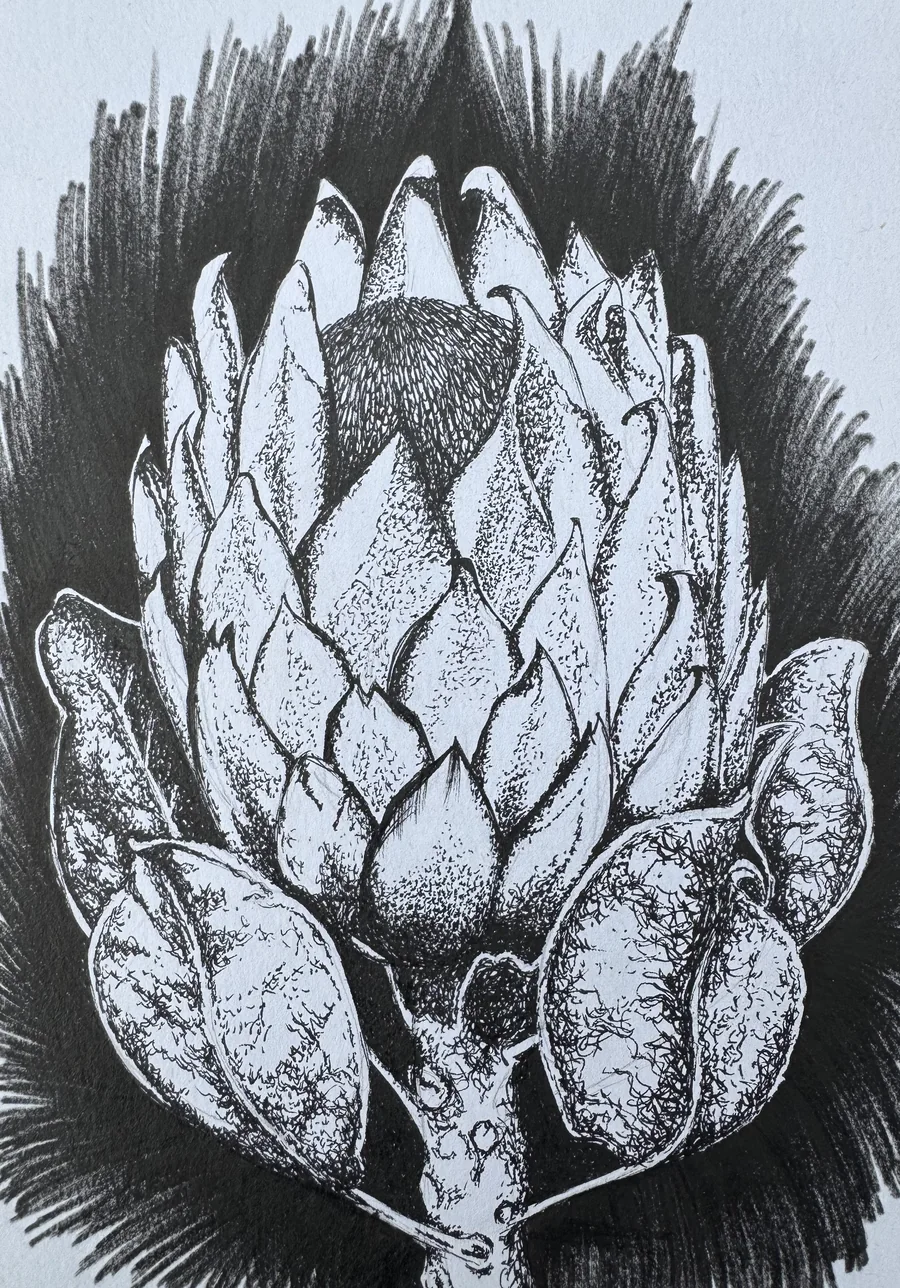
Fine-liner drawings. Thousands of small precise marks that resolve, slowly, into one clear form. It’s the same instinct as the day job, done by hand.
05
How this one was built
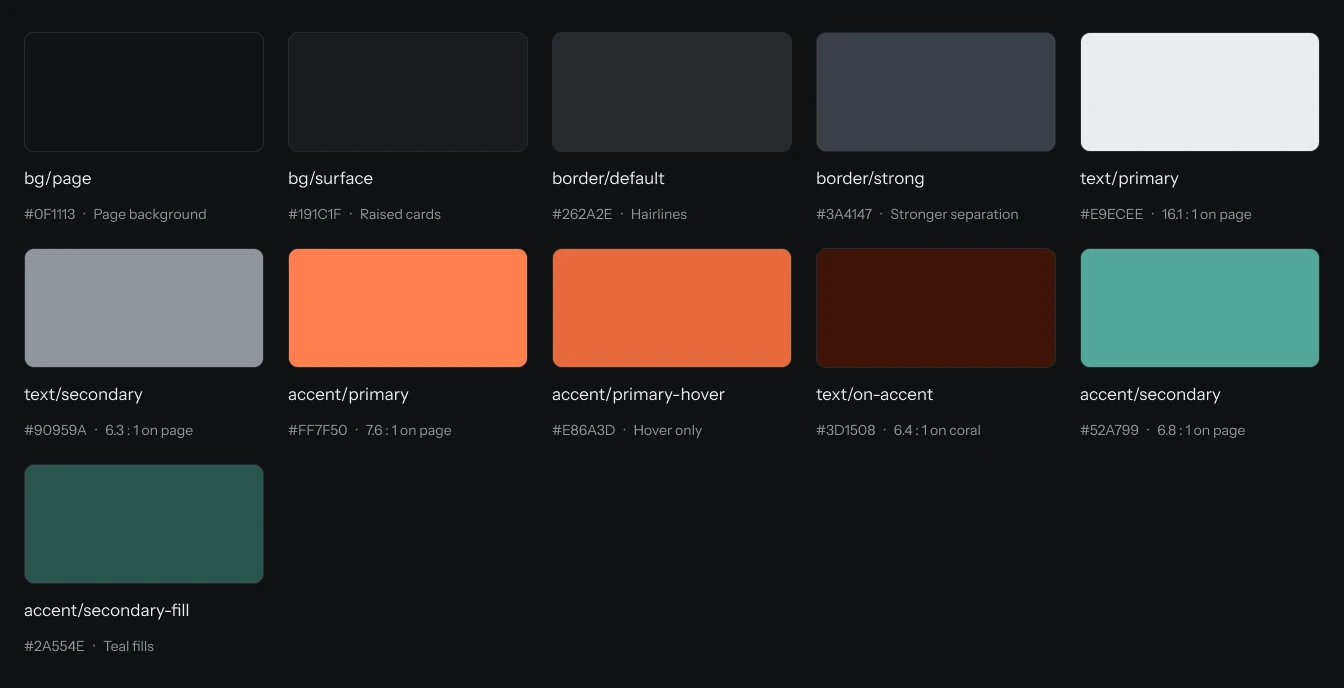
I built this site in the same order I would build a product. Brand guide, then design system, then the site, so every decision had something to answer to. Every colour was picked against a contrast target and then checked, not estimated, and the reasoning is written down as it happened, including the parts I got wrong and reversed. On mobile, every page scores 100 in Lighthouse for accessibility, and axe finds no WCAG failures.
The brand guide and the design system live in one Figma library, built straight into Figma rather than imported, with the raw colours scoped out of the picker so the only thing anyone can reach for is a semantic token.
That’s how we ended up here. The short version is that I ask better questions than I draw straight lines, and I’ve made a career of it.
Get in touch →